Documents your host in Japan needs: 住民票, 課税証明書 and more
Your checklist says “certificate of residence” and “tax certificate”. Your aunt in Osaka asks “which ones, exactly?” This page is the translation between the two, and a message you can send them right now.
- Last updated
- Updated
- Reading time
- 6 min read
- Sources
- Checked against official sources
In 30 seconds
- 1Your host signs two letters (guarantee and invitation) and gets a few official certificates.
- 2The 住民票 proves where they live; the 課税証明書 or 納税証明書 proves their income.
- 3Many embassies want certificates issued within the last 3 months.
- 4Originals go to you by tracked post; you submit everything together.
On this page
The documents, decoded#
Which of these you need depends on your nationality, your purpose, and who pays. Your nationality page and your embassy’s checklist have the exact list.
身元保証書
Mimoto hoshō-sho
Letter of Guarantee
- Proves
- Your host will cover your stay and return, and that you will follow Japanese law.
- Where
- Official form, filled in and signed by the guarantor.
招へい理由書
Shōhei riyū-sho
Letter of Invitation
- Proves
- Why you are invited and how you know each other.
- Where
- Official form, written by the inviter.
住民票
Jūminhyō
Certificate of residence
- Proves
- Where your host lives and who is in the household.
- Where
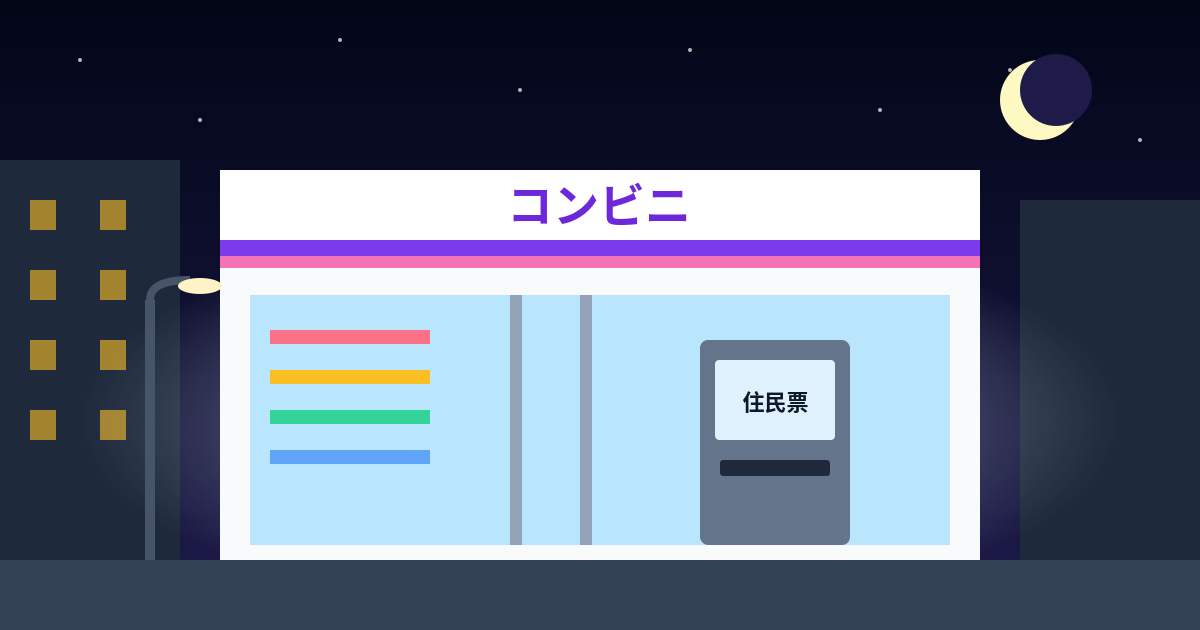
- City or ward office, or a convenience store with a My Number card.
課税証明書 / 所得証明書
Kazei / shotoku shōmeisho
Certificate of taxation / income
- Proves
- Your host’s (guarantor’s) income for the last year.
- Where
- City or ward office where they lived on 1 January of that year; often at convenience stores too.
納税証明書(その2)
Nōzei shōmeisho (sono 2)
Tax payment certificate (form 2)
- Proves
- Declared income, common for self-employed guarantors.
- Where
- The tax office (税務署) or online via e-Tax.
在職証明書
Zaishoku shōmeisho
Certificate of employment
- Proves
- Your host’s job, if the embassy asks for it.
- Where
- Their employer’s HR or general affairs team.
預金残高証明書
Yokin zandaka shōmeisho
Bank balance certificate
- Proves
- Savings, sometimes accepted as an alternative or addition to income proof.
- Where
- Your host’s bank (usually for a fee).
在留カード(写し)
Zairyū kādo
Residence card (copy)
- Proves
- For foreign residents: their status in Japan. Copy both sides.
- Where
- Your host photocopies their card.
The two letters have their own guide, with example wording: letter of invitation and letter of guarantee.
A message to send your host#
Adjust it to your embassy’s checklist, then copy and send. The Japanese version is handy if your host’s office or city hall staff need to see it.
English
Hi! I'm applying for a Japan visa to visit you. Could you please send me these, issued within the last 3 months:

1. Letter of Guarantee (身元保証書), signed
2. Letter of Invitation (招へい理由書), signed
3. 住民票 for the whole household (世帯全員・続柄入り, My Number not shown)
4. 課税証明書 or 所得証明書 (latest year), or 納税証明書 (その2)
5. A copy of your residence card, both sides (if you're not Japanese)

Please send the originals by EMS so we can track it. Thank you!
日本語
ビザ申請のため、以下の書類を準備していただけますか。(発行後3か月以内のもの)

1. 身元保証書(署名入り)
2. 招へい理由書(署名入り)
3. 住民票(世帯全員・続柄記載、マイナンバーの記載なし)
4. 課税(所得)証明書(最新年度)または納税証明書(その2)
5. 在留カードの両面コピー(外国籍の場合)

原本をEMSで送っていただけると助かります。よろしくお願いします。
Tips for hosts#
- At the counter, ask for the 住民票 「世帯全員」「続柄あり」 and without the My Number. Ask the clerk for “ビザ申請用” (for a visa application) if unsure.
- The 課税証明書 comes from the city where you lived on 1 January of the tax year. If you moved since, request it from the old city.
- Write the applicant’s name exactly as in their passport on both letters, and keep dates consistent with their trip.
- Send everything in one tracked envelope (EMS shows tracking end to end) and keep scans before you post.
Inviting several family members?
Questions people ask#
What is a 住民票 (juminhyo) for a Japan visa?
The 住民票 is the certificate of residence issued by the city or ward office where your host lives. It proves their address and household. Embassies usually want the version listing all household members, with nothing omitted except the My Number and resident code.
How old can the Japanese certificates be?
Many embassy checklists ask for certificates issued within the last three months. Your host should get them shortly before sending, and check the checklist of the embassy where you apply.
Can my host get a 住民票 at a convenience store?
In many municipalities, yes: with a My Number card, the 住民票 and often the 課税証明書 can be printed at convenience store multi-copy machines. Not every city offers every certificate this way.
Do the Japanese documents need to be translated?
Documents issued in Japan are normally accepted in Japanese by Japanese embassies, which read Japanese. Documents from your own country may need translating; follow your embassy’s checklist.
Should my host send originals or copies?
Certificates are usually needed as originals; the residence card and passport are usually copies. Send by a tracked service such as EMS, and keep scans of everything.
Official sources#
Requirements differ by embassy and change over time. The checklist of the embassy, consulate or visa centre where you apply is what your application is checked against.